
Two-week social media detox may improve focus, sleep, mood, and mental health while helping reverse signs of digital “brain rot.”
In a world dominated by endless scrolling, constant notifications, and digital overload, new research suggests that taking a short break from social media could have surprisingly powerful effects on the brain.
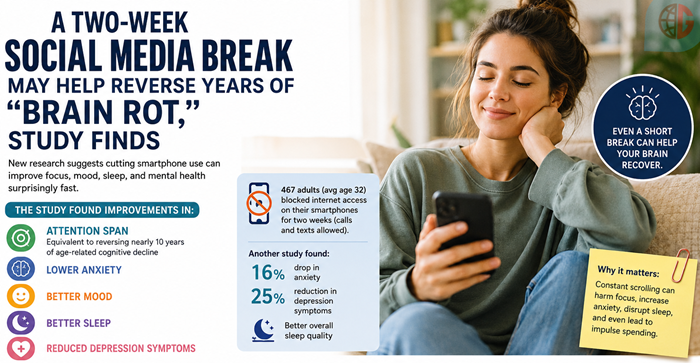
A recent study published in the journal PNAS Nexus found that reducing smartphone internet access for just two weeks significantly improved attention span, mood, sleep quality, and overall mental health among participants.
The findings add to growing concerns around what many online users casually call “brain rot” — the mental fatigue and reduced focus linked to excessive social media consumption.
Study Reveals Major Mental Health Improvements
Researchers monitored 467 adults with an average age of 32 who temporarily blocked internet access on their smartphones while still allowing calls and text messages.
After two weeks, participants reported noticeable improvements, including:
- Better concentration and attention span
- Reduced anxiety levels
- Improved mood and emotional wellbeing
- Better sleep quality
- Lower symptoms of depression
One of the study’s most striking discoveries was the improvement in sustained attention. Researchers noted that participants showed cognitive gains comparable to reversing nearly a decade of normal age-related decline in focus.
Another Harvard-associated study published in JAMA Network Open produced similar results. Participants who reduced smartphone usage for just one week experienced:
- A 16% decrease in anxiety
- Nearly 25% lower depression symptoms
- Improved sleep quality overall
Why Smartphones Affect the Brain So Deeply
Experts believe smartphones impact mental health differently from traditional computers because they remain constantly within reach.
Unlike desktop devices, phones interrupt conversations, meals, work, sleep, and even personal downtime. Researchers describe smartphone use as more compulsive, impulsive, and automatic compared to regular internet browsing on computers.
Social media platforms are also intentionally designed to maximize engagement through infinite scrolling, personalized recommendations, and constant dopamine-triggering notifications, making it difficult for users to mentally disconnect.
Six Simple Ways to Give Your Brain a Reset
Researchers say users do not need to completely abandon technology to see benefits. Even small adjustments to daily smartphone habits may help improve focus and mental clarity.
1. Move Social Media Apps Away From Your Home Screen
Relocating apps like Instagram, TikTok, Facebook, X, and YouTube into folders or secondary screens creates small barriers that interrupt automatic scrolling behavior.
That extra second of effort can significantly reduce unconscious phone usage.
2. Turn Off Most Notifications
Constant alerts train the brain to expect interruptions throughout the day.
Experts recommend disabling:
- Social media notifications
- Shopping app alerts
- Breaking news notifications
- Promotional messages
Keeping only essential alerts such as calls, texts, and calendar reminders may help reduce stress and improve focus.
3. Stop Carrying Your Phone Everywhere
Researchers found that constant phone proximity itself can weaken attention spans.
Leaving the phone behind during meals, short walks, grocery runs, workouts, or family activities can give the brain valuable recovery time.
4. Make the Bedroom a Low-Phone Zone
Late-night scrolling is strongly linked to poor sleep quality and increased stress.
Experts suggest:
- Charging phones outside the bedroom
- Avoiding screens 30–60 minutes before sleep
- Using a traditional alarm clock instead of a smartphone
Many participants reported major mental health improvements simply by reducing nighttime doomscrolling.
5. Use App Blockers Instead of Relying on Willpower
Several apps can help users limit social media usage automatically, including:
- Freedom
- Opal
- ScreenZen
- Forest
- Apple Screen Time
- Android Digital Wellbeing
These tools temporarily block selected apps during chosen hours to reduce distraction and compulsive usage.
6. Replace Scrolling With Offline Activities
Experts recommend replacing idle scrolling with more physical or mindful activities such as:
- Walking
- Reading
- Stretching
- Journaling
- Cooking
- Listening to music
- Short workouts
- Face-to-face conversations
Simple offline habits may help retrain attention spans and reduce dependency on digital stimulation.
Social Media Detox Could Also Reduce Impulse Spending
Researchers also noted that cutting back on social media exposure may positively affect personal finances.
Frequent scrolling exposes users to influencer promotions, targeted advertising, flash sales, and constant product recommendations, often encouraging unnecessary spending.
Experts recommend trying a “low-buy weekend” by avoiding both social media and online shopping apps for 48 hours to better understand how boredom scrolling influences spending habits.
The Bottom Line
The research does not claim smartphones are inherently harmful. However, growing evidence suggests excessive social media and nonstop internet consumption may significantly impact focus, mood, sleep, anxiety, and even financial habits.
The encouraging takeaway is that the brain may recover faster than many people expect.
According to researchers, even a short break from constant scrolling could deliver meaningful mental and cognitive benefits in just a matter of days.
Read more: Hexaware Expands AI and Cloud Transformation Ambitions with CPS Acquisition